
As humanoid and industrial robots move from lab prototypes into full production lines, one engineering constraint keeps surfacing on every design review: mass. Every gram added to a robot's arm, leg, or joint assembly has to be accelerated, decelerated, and held in position by a motor that also adds weight and draws battery power. That compounding effect is exactly why magnesium alloy CNC machining has quietly become one of the fastest-growing specialties inside precision manufacturing.
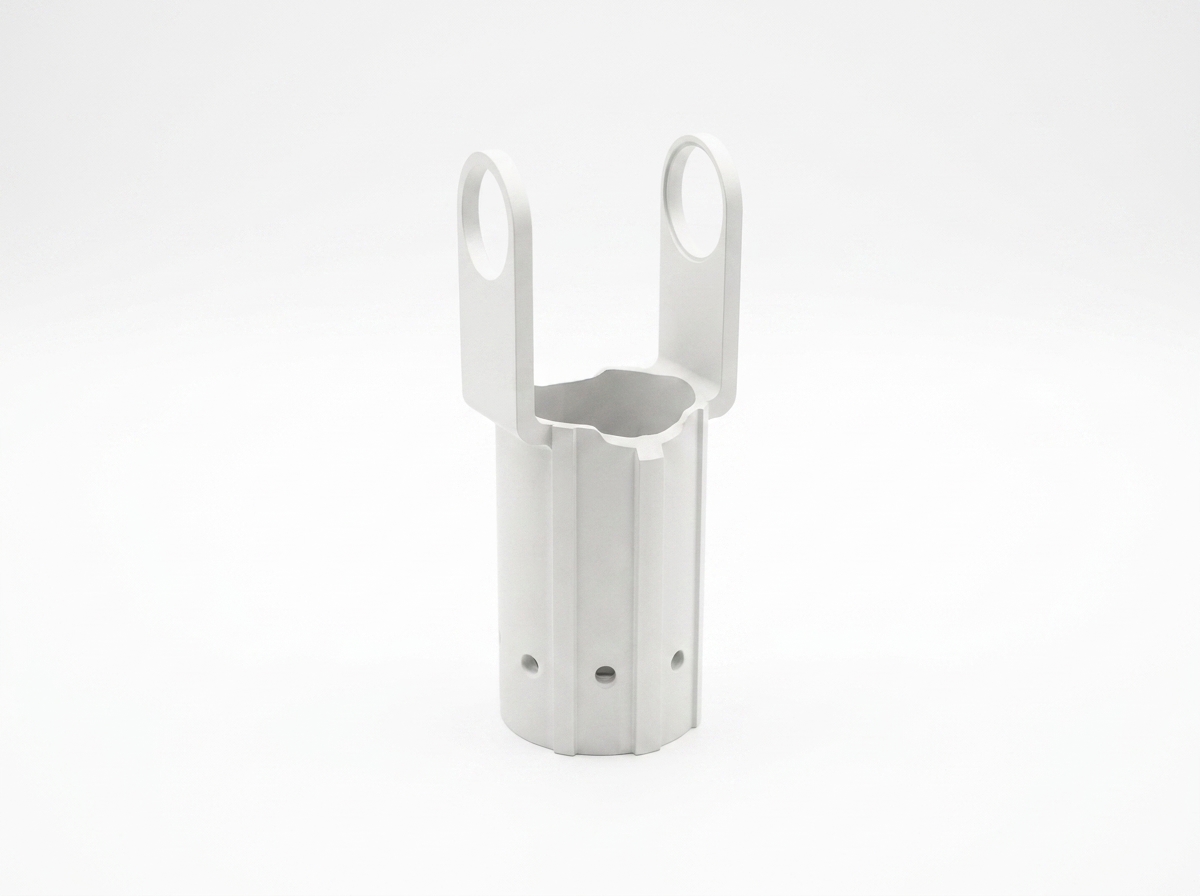
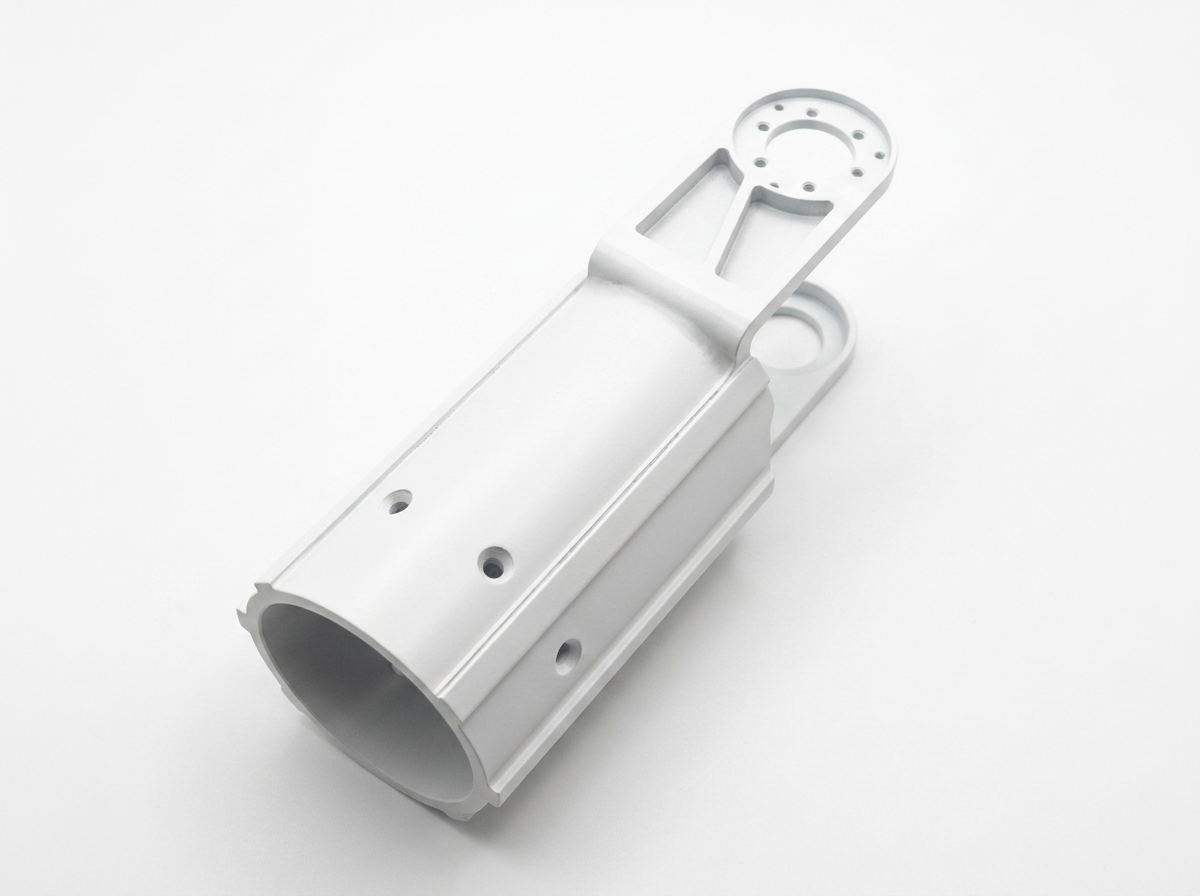
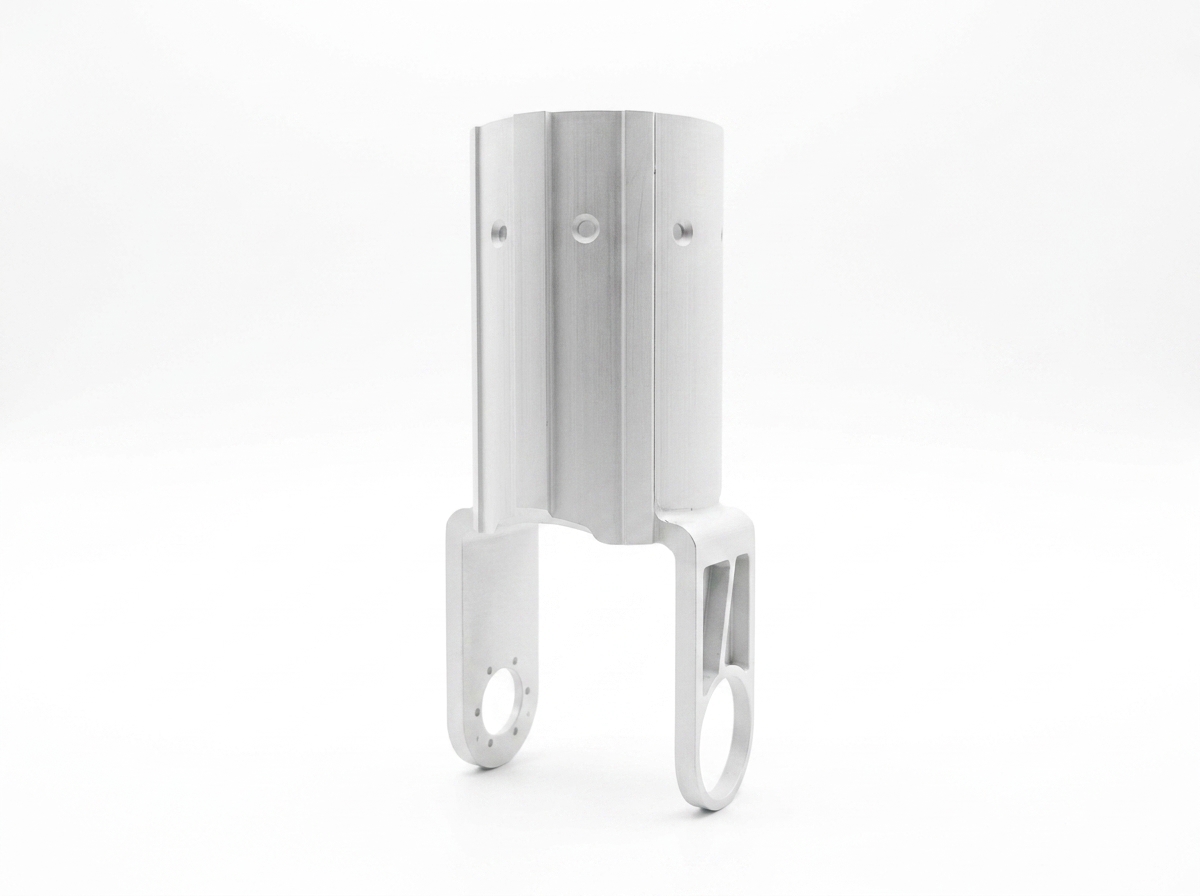
The joint bracket pictured in this article is a good example: a dual-fork, cable-routing pivot housing machined from solid magnesium alloy bar stock on CNC lathes and CNC milling centers, then micro-arc oxidized for corrosion protection. It is the kind of component robotics OEMs are now sourcing at scale — turned, milled, drilled, surface-treated, and inspected to tolerances that used to belong almost exclusively to aerospace.
This article looks at why magnesium alloy has become the structural metal of choice for robot joints, how a part like this is actually machined, why micro-arc oxidation is the preferred surface treatment, and what to look for in a manufacturing partner that can deliver it reliably at export scale.
1. The Weight Problem Robotics Engineers Can't Design Around
Humanoid and collaborative robots move by driving joints with electric actuators, and every kilogram of structural mass in a limb has to be carried, accelerated, and decelerated by that same actuator. Adding a bigger motor to compensate only adds more mass, which is exactly the loop robotics engineers are trying to break. Industry material reviews note that excessive mass in a humanoid robot increases the load on its motors, directly reducing agility, payload capacity, and endurance.
● Lower limb mass reduces the torque an actuator has to produce, which allows a smaller, lighter, and cheaper motor to do the same job.
● Reduced inertia in moving parts means faster acceleration and more precise deceleration — a direct benefit for dynamic balance and manipulation tasks.
● Lower total mass extends runtime on a fixed battery pack, which matters more as mobile and humanoid platforms scale toward commercial deployment.
● Structural components — joints, gears, and skeletal supports — are typically the first parts engineers target for material substitution, because they carry the most redundant mass in early designs.
2. Why Magnesium Alloy Wins the Material Race
Aluminum, titanium, and magnesium alloys are the three metals most commonly discussed for lightweight robotics structures, and each earns its place for different reasons. Magnesium stands apart on two axes at once: it is the lightest of the three by a wide margin, and it is also the easiest to cut.
Magnesium, with a nominal alloy density of only about 1.8 g/cm³, is considered the lightest structural metal available, and it is also one of the easiest metals to machine, according to ASM International's reference handbook on machining magnesium alloys, which notes that less cutting power is required to remove a given volume of magnesium than for any other commonly machined structural metal.
That combination — lowest density plus lowest cutting force — is precisely why magnesium alloy CNC machining is scaling so quickly for joint housings and brackets: parts can be cut faster, with less tool wear, while ending up lighter than an equivalent aluminum design.
| Material | Typical Density | Machinability | Common Role in Robot Joints |
| Magnesium alloy (AZ91D / AZ31B) | ~1.8 g/cm³ | Excellent — lowest cutting force of common structural metals | Joint housings, arm brackets, cable-routing forks |
| Aluminum alloy (6061 / 7075) | ~2.7 g/cm³ | Very good | General structural frames, enclosures, panels |
| Titanium alloy (Ti-6Al-4V) | ~4.5 g/cm³ | Difficult — high tool wear, low feed rates | High-load-bearing joints, medical-grade actuators |
This weight advantage is already visible in flagship robotics programs. According to industry coverage of Tesla's Optimus platform, magnesium alloys are a core structural material in Optimus Gen 2, used specifically to reduce component weight, improve drive response efficiency, and support thermal management — the same design goals that apply to any joint bracket, whether it sits inside a humanoid robot or an industrial arm.
3. From Bar Stock to Finished Bracket: How the Part Is Machined
The bracket shown in this article starts as a solid round bar of magnesium alloy — not a casting, and not a welded assembly. That single-billet approach is a deliberate design choice for robotics components, because it removes weld seams and fastened joints that could loosen or fatigue under the repeated vibration and load cycles a robot joint experiences.
● CNC turning shapes the cylindrical collar body first — the outer profile, the internal bore that will seat a shaft or actuator, and the ribbed exterior surface that both saves weight and adds grip and stiffness.
● The part then moves to a CNC milling center, where the mounting holes and dowel/alignment holes are drilled and reamed into the flat face of the collar.
● The forked, cable-routing arms are milled directly from the same billet as the collar — a one-piece, machined-from-solid construction rather than a separately attached bracket.
● Round pivot bores are bored at the end of each fork arm, and the multi-hole bolt pattern around the pivot is drilled on a rotary index for even spacing.
● Edges are deburred and broken, and the part is cleaned before it moves to surface treatment.
Every one of those operations — turning, milling, drilling, reaming, boring — happens on the same class of equipment used across our CNC machining services, and the finished geometry is checked against the same lathe-turned tolerances we hold on other precision turned components, such as the precision shaft components we regularly produce for mechanical equipment manufacturers.
4. Micro-Arc Oxidation: Turning a Reactive Metal Into a Durable One
Magnesium's one real weakness is corrosion resistance in bare metal form. That is why almost every magnesium robotics component ships with a surface treatment, and micro-arc oxidation (MAO, also called plasma electrolytic oxidation) is the process of choice for structural parts.
Unlike a paint or plating layer sitting on top of the metal, MAO grows a hard, ceramic-like oxide layer directly out of the base metal's surface using high-voltage plasma discharges in an electrolyte bath.
A systematic review of pre- and post-treatment processes for MAO coatings on magnesium alloys, published via PMC / National Library of Medicine, confirms that micro-arc oxidation is an effective way to markedly improve the corrosion resistance of magnesium alloys, and that additional pre- and post-treatment steps further densify the coating and improve its overall performance.
For a robot joint bracket, that ceramic oxide layer delivers several practical benefits at once:
● Corrosion resistance suited to indoor industrial and logistics environments, without adding a separate plated layer.
● Improved surface hardness and wear resistance at contact points and mounting faces.
● Electrical insulation, which matters when a bracket sits close to motor windings or wiring harnesses.
● A uniform, matte light-grey finish that is consistent across production batches — the same finish visible on the sample bracket.
This is one of the reasons our surface treatment line is built around processes like micro-arc oxidation and anodizing rather than paint-only finishes — for magnesium and aluminum robotics components, the treatment has to be part of the part, not a coating applied after the fact. You can see the full range of options on our surface treatment services page.
5. Quality Control and Export-Ready Packaging
A magnesium robot joint bracket is only as good as the batch consistency behind it. Because these parts sit inside a moving assembly with tight mating tolerances, dimensional drift of even a few hundredths of a millimeter across a production run can create fit problems downstream. For that reason, every dimension and every visible surface on every part is checked before shipment, not sampled statistically.
| QC Checkpoint | Method | Purpose |
| Dimensional tolerance | 100% CMM / digital caliper inspection | Confirm bore diameter, hole spacing, and wall thickness match the drawing |
| Coating thickness & adhesion | Coating thickness gauge, cross-hatch adhesion test | Verify the micro-arc oxidation layer meets the corrosion and hardness spec |
| Cosmetic / visual | Full visual inspection under standard lighting | Catch tool marks, porosity, or discoloration before packing |
| Packaging integrity | Individual bubble-bag wrap, carton drop test | Prevent transit scuffing or impact damage before installation |
Once a part passes full inspection, it is individually wrapped in its own bubble bag rather than bulk-packed — a small step, but one that matters for a lightly oxidized magnesium surface that can pick up scuff marks if parts are allowed to rub against each other in a shipping carton.
6. Market Momentum: Why Robotics Buyers Are Sourcing Now
The pace of demand for components like this reflects a broader shift in the robotics supply chain.
According to Goldman Sachs Research, the total addressable market for humanoid robots is projected to reach roughly $38 billion by 2035, more than six times an earlier estimate, with annual shipment forecasts rising into the millions of units over the same period.
Separately, IDTechEx's research on materials for humanoid robots identifies 2026 and 2027 as key transition years, as more robotics programs move from pilot testing toward production readiness — a shift that turns one-off prototype parts into recurring, multi-thousand-unit CNC machining orders for structural metal components, including magnesium and aluminum alloys.
For manufacturers already sourcing turned and milled components for other industries, this is the moment robotics component sourcing moves from a side project to a standing line item — which is why having a supplier who already runs high-precision CNC turning, milling, and surface treatment as core services, rather than a one-off capability, matters more than ever.
7. What to Look for in a Magnesium CNC Machining Partner
● Both CNC turning and multi-axis CNC milling in-house, so a one-piece part like a joint bracket doesn't require outsourcing between shops.
● A qualified micro-arc oxidation or anodizing line suited to magnesium and aluminum alloys, not just steel plating.
● 100% dimensional inspection reports available on request, not sample-based QC.
● Individual export packaging built around protecting a treated surface finish in transit.
● Fast sample turnaround, since robotics programs iterate on joint geometry quickly during development.
Ready to Source Your Robotics Components?
Turn Your Robot Joint Design Into a Production-Ready Part
MK Machinery specializes in precisely this kind of work: high-precision CNC turning and milling of magnesium and aluminum alloy components, backed by an in-house surface treatment line covering micro-arc oxidation, anodizing, and plating, and a 100% inspection process before every shipment. Whether you need a single joint bracket prototyped or a multi-thousand-unit production run of robot housings, gears, or structural brackets, our engineering team can work directly from your drawings or samples. We also support complementary processes such as precision casting for larger structural components. If you are developing a magnesium or aluminum robotics part and need a manufacturing partner who can turn, mill, treat, inspect, and export it reliably, get in touch with our team today for a quote.
Get a Quote | View Our CNC Machining Services | See Our Equipment